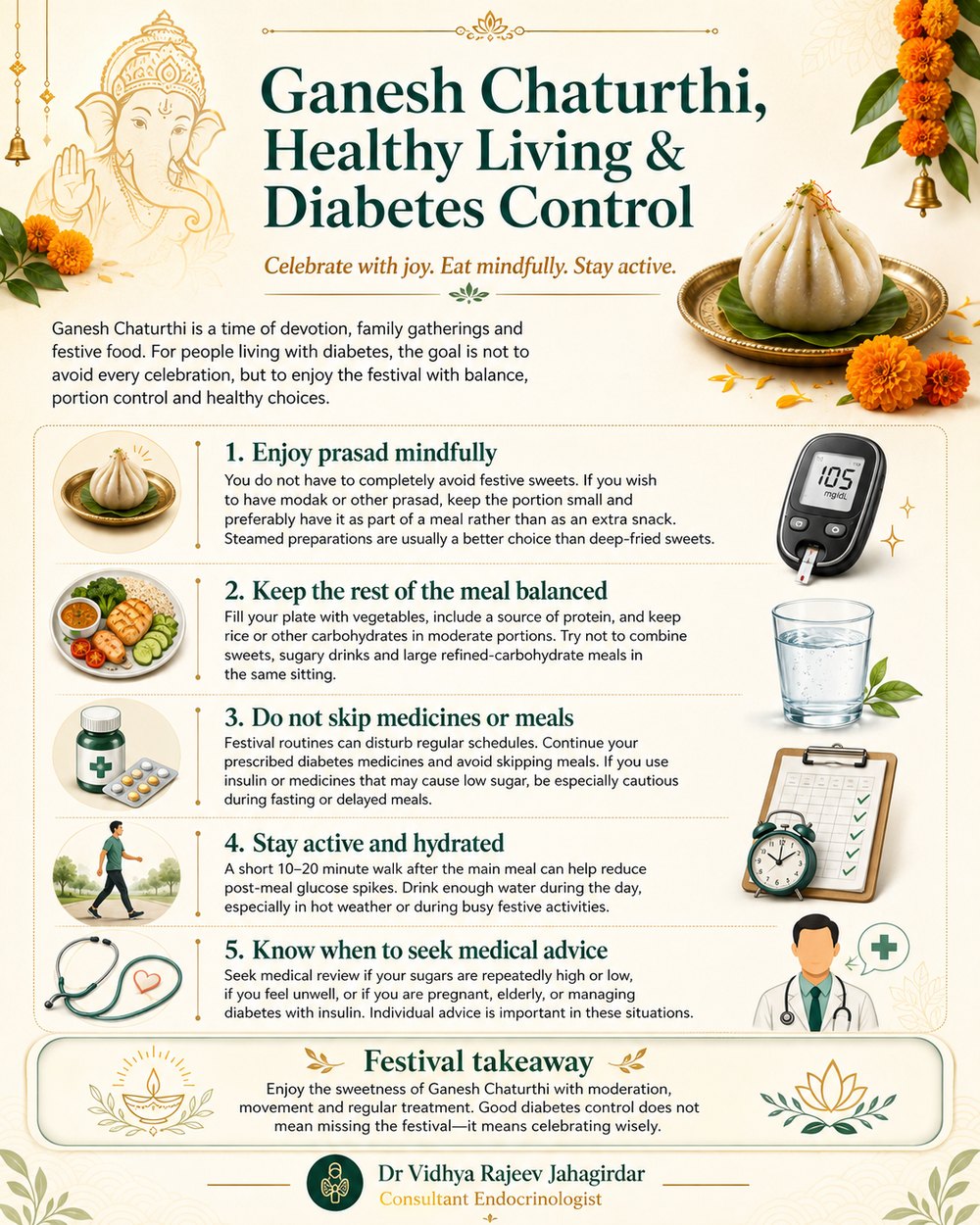
Ganesh Chaturthi brings together devotion, family, travel, festive meals and, naturally, modak and other sweets. For someone living with diabetes, these occasions can sometimes create unnecessary anxiety: Can I eat prasad? Should I skip lunch if I have a sweet? What happens to my medicines if meal timings change? The aim is not to remove enjoyment from the festival. It is to make a few sensible adjustments so that celebration and diabetes control can comfortably coexist.
1. Enjoy the modak—but think about portion and timing
A person with diabetes does not necessarily have to completely avoid prasad or festive sweets. A small portion can often be incorporated into the day, particularly when overall glucose control is reasonable and there are no specific dietary restrictions from the treating team.
Rather than repeatedly snacking on sweets through the day, choose the item you genuinely want, keep the portion modest and preferably have it as part of a balanced meal. Steamed modak avoids the additional fat of deep frying, although it still contains carbohydrate and sweet filling. Jaggery, honey and unrefined sugars also raise blood glucose; they should not be regarded as “free” alternatives to sugar.
2. Let the rest of the plate do the balancing
If you plan to have a festive sweet, make the rest of the meal work in your favour. Include plenty of vegetables, a useful source of protein such as pulses, curd, paneer, egg, fish or lean meat according to your usual diet, and a controlled portion of rice, roti or other starch.
What often pushes post-meal glucose much higher is not one small sweet alone, but the combination of a large refined-carbohydrate meal, sweet drinks, dessert and repeated snacking. Water, unsweetened beverages and sensible portions can make the celebration far easier to manage.
3. Do not “save calories” by skipping meals or medicines
Festival schedules may alter meal times, but deliberately skipping a meal to compensate for sweets can be problematic—especially for people using insulin or medicines that can cause hypoglycaemia. Similarly, diabetes medication should not be stopped simply because the day is different from usual.
If you are planning fasting, prolonged religious observance or unusually delayed meals, discuss this in advance with your clinician when possible. The safest approach depends on your type of diabetes, medicines, kidney function, glucose pattern and risk of low sugar.
4. Check glucose a little more thoughtfully during unusual days
If you already monitor at home, festival days are a useful time to pay attention to patterns rather than becoming worried about a single reading. People using insulin, continuous glucose monitoring (CGM), or medicines associated with hypoglycaemia may need more frequent checks when food intake or activity differs substantially from routine.
Repeated very high readings, recurrent lows, vomiting, dehydration or feeling markedly unwell should not be dismissed as a consequence of “festival food.” Seek appropriate medical advice, particularly if you have Type 1 diabetes, are pregnant or use insulin.
5. A short walk after the meal is one of the simplest useful habits
For people who are medically able to exercise, a gentle 10–20 minute walk after a main meal is a practical way to add activity to a festive day and can help reduce the post-meal glucose rise. It does not need to be a formal workout. Walking with family, helping with preparations, or taking a short stroll after lunch all count.
The key is consistency. A festival should not become several completely inactive days followed by an attempt to compensate with excessive exercise.
6. Hydration matters—especially during travel, crowds and warm weather
Busy celebrations can make it surprisingly easy to forget water. Dehydration may make high-glucose symptoms feel worse and can complicate illness. Carry water when travelling or attending long events, unless you have specifically been advised to restrict fluids for another medical reason.
If you use insulin, also plan how it will be transported and stored safely during travel. Carry your medicines, glucose-testing supplies and a source of fast-acting carbohydrate for treating hypoglycaemia rather than leaving them at home because you expect to return quickly.
7. Do not overlook foot safety during temple visits and celebrations
This is particularly important for people with diabetic neuropathy or reduced sensation in the feet. Barefoot walking, hot surfaces, sharp objects, crowded processions or a small unnoticed blister can cause problems when sensation is reduced.
Where appropriate and permitted, minimise unnecessary barefoot walking, inspect the feet after long outings, and do not ignore cuts, blisters, redness, swelling or warmth. A person with diabetes and reduced foot sensation should seek early assessment for a wound rather than waiting for it to become painful.
8. “Sugar-free” does not always mean glucose-free
Festival products labelled sugar-free may still contain flour, starch, milk solids, dried fruit or other carbohydrates, and some are high in calories and fat. They can be useful in selected situations, but the label should not become permission to eat an unlimited quantity.
For most people, portion awareness and the overall pattern of the meal are more useful than searching for a supposedly perfect sweet.
A sensible festival plan
- Take your prescribed medicines as advised.
- Keep meals reasonably regular.
- Choose one small portion of the festive food you value most.
- Balance the meal with vegetables and protein.
- Prefer water to sugary drinks.
- Walk gently after the main meal if medically appropriate.
- Monitor glucose according to your usual plan, with extra attention if routines change.
- Carry treatment for hypoglycaemia if you are at risk.
- Protect and inspect your feet if you have neuropathy.
When should you seek medical advice?
Individual guidance is especially important if you are pregnant, elderly or frail, have kidney disease, experience frequent hypoglycaemia, use insulin, have Type 1 diabetes, or intend to fast. Seek urgent medical attention for severe or persistent low glucose, marked hyperglycaemia with vomiting or dehydration, confusion, breathing difficulty, or a concerning diabetic foot wound.